


Subtotal ₹0.00


 24 Hour Emergency Aid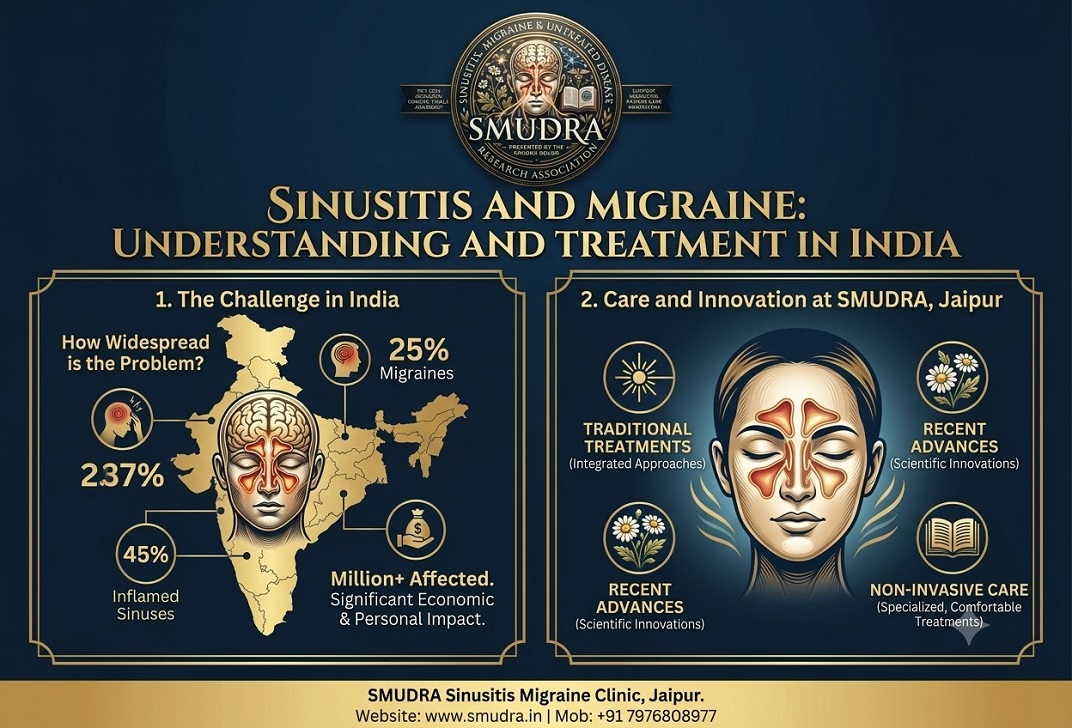
How Widespread is the Sinusitis and Migraine Problem in India? Traditional Treatments, Recent Advances, and Non-Invasive Care at SMUDRA, Jaipur
Sinusitis and migraine affect tens of millions of Indians, often overlapping in symptoms and significantly reducing quality of life. Many people struggle with chronic facial pressure, headaches, nasal congestion, and sensitivity to light or sound without finding lasting relief. Limited awareness of root causes among patients and providers, plus uneven access to quality Ayurveda and Naturopathy care, leaves many untreated or cycling through temporary fixes.
How Widespread is the Problem in India?
Chronic rhinosinusitis (CRS) is highly prevalent. Widely cited estimates indicate roughly 134 million Indians live with chronic sinusitis—more than the populations affected by diabetes or asthma in some comparisons. Pollution (especially high PM2.5 levels), allergic rhinitis (common in 20–30% of urban Indians), dust mites, and seasonal factors drive this burden. In ENT outpatient departments, different forms of rhinosinusitis rank among the top complaints, with chronic cases often the most frequent subtype.
Migraine is even more common relative to global averages. Population-based studies report 1-year prevalence around 25% in regions like Karnataka and about 26% in Delhi-NCR—substantially higher than the global estimate of roughly 14–15%. Broader figures suggest over 200 million Indians experience migraine, with higher rates in women and peak impact in working-age and reproductive years. Headache disorders overall affect hundreds of millions and rank among the leading contributors to neurological disability in India. Overlap is frequent: many “sinus headaches” turn out to be migraine (or vice versa), and comorbid cases worsen quality-of-life scores.
These conditions reduce productivity, disrupt sleep and daily functioning, and often go underdiagnosed or mismanaged for years.
Traditional Sinusitis and Migraine Treatments
Conventional approaches typically focus on symptom control:
- For sinusitis: saline rinses, nasal steroid sprays, decongestants, antibiotics (when bacterial infection is confirmed), and, in refractory cases, functional endoscopic sinus surgery (FESS).
- For migraine: acute pain relief (NSAIDs, triptans), preventive medications, lifestyle trigger management, and sometimes neuromodulation or newer CGRP-targeted therapies.
Limitations are well recognized. Repeated short courses of antibiotics for inflammatory (not purely infectious) sinus disease offer little long-term benefit and risk resistance. Painkillers and preventives can lead to medication-overuse headache, side effects, or incomplete relief. Many patients receive treatments that address surface symptoms without correcting underlying imbalances, structural contributors, allergies, or constitutional factors. Access gaps and incomplete education about differential diagnosis (sinus vs. migraine vs. both) further delay effective care.
Recent Advances in Sinusitis and Migraine Treatments
Modern options include refined diagnostic tools (nasal endoscopy, CT, validated questionnaires), biologic therapies for severe CRS with polyps or refractory migraine, and better understanding of the nose-brain axis and trigeminal involvement. Integrative approaches are gaining evidence: Ayurvedic therapies such as Nasya (nasal administration of medicated oils or herbs), herbal anti-inflammatories, dietary modulation, and lifestyle measures show promise as adjuncts or primary strategies for reducing inflammation, congestion, and headache frequency. Naturopathic and holistic protocols emphasize root-cause assessment, dosha balance, and non-pharmacologic support. Clinical observations and emerging studies support meaningful symptom reduction and improved quality of life when these methods are applied systematically.
Advanced Sinusitis and Migraine Treatment at SMUDRA, Jaipur
SMUDRA (Sinusitis Migraine and Untreated Diseases Research Association) operates a specialized Ayurveda and Naturopathy clinic in Jaipur focused on these conditions. It positions itself as a dedicated center combining classical Ayurvedic principles with naturopathic techniques to target root causes rather than only symptoms. Programs such as Sinocare integrate herbal formulations, nasal therapies, dietary guidance, and supportive practices aimed at long-term relief from chronic sinusitis, allergic rhinitis, and migraine-related pain.
The clinic emphasizes non-invasive, personalized care suitable for first-time Ayurveda users and those seeking alternatives or complements to conventional medicine. Location references include Jamunapuri / Murlipura areas of Jaipur. Contact details provided by the organization: website www.smudra.in and mobile +91 7976808977.
Ready to Know If You Are a Candidate for Non-Invasive Sinusitis & Migraine Treatments?
If you experience recurrent facial pressure, nasal congestion or discharge, frequent headaches, light/sound sensitivity, or poor response to repeated courses of conventional medicines, a thorough evaluation can clarify the diagnosis and suitable options. SMUDRA invites people seeking integrative Ayurveda–Naturopathy care to request an appointment.
There are other reasons people can’t find help for the pain. Some of it has to do with a lack of education regarding the causes of Sinusitis and Migraine pain–for both patient and provider – and many simply have no access to quality Ayurveda and Naturopathy healthcare.
Request an appointment at SMUDRA Sinusitis Migraine Clinic
Sinusitis Migraine and Untreated Diseases Research Association
Web: www.smudra.in
Mob: +91 7976808977
Proper diagnosis and a multimodal plan—whether conventional, integrative, or combined—offer the best path to reduced pain and restored daily function. Consult qualified practitioners for individualized advice.