Subtotal ₹0.00


 24 Hour Emergency Aid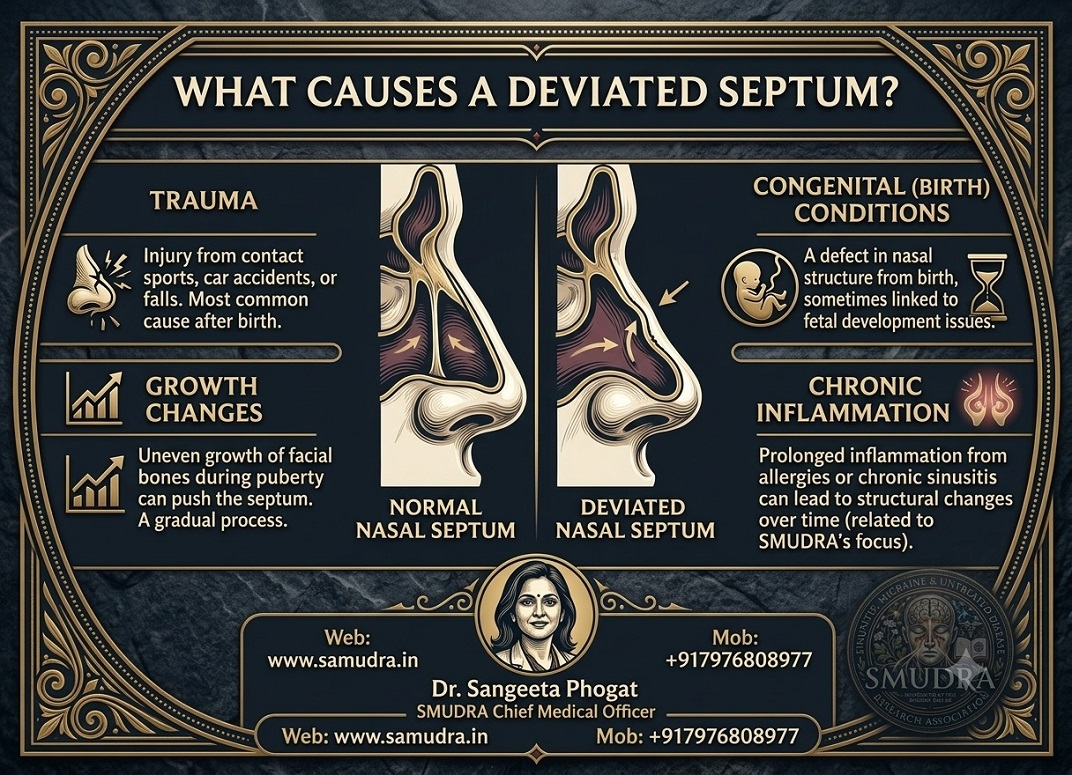
What Causes a Deviated Septum? Causes, Symptoms & Treatment
A deviated septum is a common nasal condition in which the wall separating the two nasal passages is shifted to one side. While some people have a deviated septum without noticeable symptoms, others may experience blocked nose, difficulty breathing, recurrent sinusitis, headaches, facial pressure, snoring, and poor sleep.
But what causes a deviated septum? It can develop naturally during growth, result from an injury to the nose, or sometimes be present from birth. Understanding the causes and symptoms can help you choose the right approach for managing nasal and sinus problems.
What Is a Deviated Septum?
The nasal septum is the thin structure made of bone and cartilage that divides the nose into two passages. Ideally, it sits relatively centrally and allows air to pass freely through both sides.
When the septum is significantly displaced toward one side, it is called a deviated septum.
A mild deviation may not cause any problems. However, a more pronounced deviation can narrow one nasal passage and interfere with normal airflow.
What Causes a Deviated Septum?
There are several possible causes of a deviated septum.
1. A Deviated Septum Present From Birth
Some people are born with a deviated septum. During fetal development, the nasal structures may develop slightly unevenly.
A deviation can also become more noticeable as the nose and facial structures grow during childhood and adolescence.
2. Injury or Trauma to the Nose
One of the most common causes of a deviated septum is an injury to the nose.
Sports injuries, falls, road accidents, physical trauma, or other impacts can move the nasal septum from its normal position.
Even an injury that happened many years ago may contribute to long-term nasal blockage.
3. Childhood Injuries
Minor nasal injuries during childhood may sometimes affect the position or development of the septum.
Because children are still growing, an injury to the nose may not immediately produce significant symptoms but can contribute to nasal breathing problems later in life.
4. Natural Changes With Age
The structure of the nose can change gradually with age. Changes in cartilage, bone, and surrounding tissues may make existing nasal obstruction more noticeable.
As a result, some people may develop increased difficulty breathing through the nose as they get older.
What Are the Symptoms of a Deviated Septum?
A deviated septum does not always cause symptoms. When it does, common symptoms may include:
- Persistent or recurring nasal blockage
- Difficulty breathing through one or both nostrils
- Frequent nasal congestion
- Recurrent sinus problems
- Facial pressure
- Headaches
- Postnasal drip
- Frequent nosebleeds
- Snoring
- Noisy breathing during sleep
- Dryness or irritation inside the nose
- Reduced quality of sleep
Symptoms can vary depending on the degree of deviation and whether other nasal conditions are present.
Can a Deviated Septum Cause Sinusitis?
A deviated septum can contribute to impaired airflow and drainage from the nose and sinuses. In some people, this may be associated with recurrent sinus symptoms.
However, not every case of sinusitis is caused by a deviated septum. Allergies, infections, nasal polyps, environmental irritants, and other conditions can also contribute to sinus problems.
If you frequently experience nasal blockage, facial pressure, or recurring sinus symptoms, a professional evaluation can help identify the underlying cause.
Can a Deviated Septum Cause Headaches or Migraine?
Nasal and sinus problems can sometimes be associated with facial pressure and headache-like symptoms. However, it is important to distinguish sinus-related headaches from migraine, because their causes and treatments can be different.
People who experience frequent or severe headaches should receive an appropriate clinical evaluation rather than assuming that a deviated septum is the only cause.
How Is a Deviated Septum Diagnosed?
A healthcare professional may evaluate your symptoms and examine the inside of your nose.
Depending on the symptoms, assessment may include:
- Medical and symptom history
- Examination of the nose and nasal passages
- Evaluation for nasal swelling or inflammation
- Assessment of sinus-related symptoms
- Additional examination or imaging when clinically appropriate
Diagnosis is important because nasal obstruction can have several different causes.
How Is a Deviated Septum Treated?
Treatment depends on the severity of the deviation and the symptoms it causes.
Conservative Management
For people with mild symptoms, treatment may focus on managing nasal inflammation and improving nasal breathing. Depending on the individual situation, a healthcare professional may recommend appropriate medicines or nasal therapies.
Lifestyle and Environmental Measures
Reducing exposure to dust, smoke, allergens, and other nasal irritants may help some people manage congestion and irritation.
Adequate hydration and maintaining a comfortable indoor environment may also support nasal comfort.
Surgical Treatment
When a structural deviation causes significant and persistent nasal obstruction, septoplasty may be considered. Septoplasty is a surgical procedure designed to straighten the nasal septum and improve airflow.
Whether surgery is appropriate depends on the individual’s symptoms, examination findings, overall health, and treatment goals.
Can a Deviated Septum Be Managed Naturally?
Some people look for non-surgical approaches to manage nasal and sinus symptoms. Such approaches may focus on improving nasal hygiene, reducing triggers, and supporting comfortable breathing.
However, it is important to understand that a significantly displaced septum is a structural problem. Non-surgical approaches generally cannot physically straighten a severely deviated septum.
For this reason, persistent nasal obstruction should be professionally assessed before choosing a treatment approach.
Sino Care Deviated Septum Treatment Pack
Sino Care Deviated Septum Treatment Pack is presented as part of an Ayurvedic approach to supporting people dealing with nasal and sinus-related concerns.
The appropriate treatment plan can vary from person to person depending on symptoms, severity, nasal anatomy, and other contributing factors.
If you are experiencing persistent nasal blockage, recurrent sinus symptoms, headaches, or difficulty breathing through your nose, consider consulting a qualified healthcare professional for an appropriate evaluation.
When Should You Seek Medical Advice?
You should consider professional evaluation if you have:
- Persistent nasal obstruction
- Difficulty breathing through your nose
- Recurrent sinus symptoms
- Frequent nosebleeds
- Persistent facial pressure
- Severe or recurring headaches
- Significant snoring or sleep disruption
- Symptoms following a nasal injury
A proper assessment can help determine whether a deviated septum, sinus condition, allergy, migraine, or another problem is contributing to your symptoms.
Frequently Asked Questions
What is the main cause of a deviated septum?
A deviated septum may be present from birth or develop due to nasal trauma or injury. Natural changes during growth and aging can also contribute to symptoms.
Can a deviated septum get worse?
The underlying deviation may not necessarily progressively worsen, but symptoms can become more noticeable because of swelling, allergies, aging-related changes, or other nasal conditions.
Can a deviated septum cause a blocked nose?
Yes. If the septum significantly narrows one nasal passage, it can contribute to difficulty breathing through the nose.
Can a deviated septum cause sinus problems?
It can contribute to impaired nasal airflow and drainage in some people, potentially making sinus symptoms more troublesome. However, sinusitis has multiple possible causes.
Is surgery always required for a deviated septum?
No. Treatment depends on symptoms and severity. People with mild or manageable symptoms may not require surgery. Significant structural obstruction may require specialist assessment to determine whether septoplasty is appropriate.
Can Ayurveda help with deviated septum symptoms?
Ayurvedic approaches may be used by some people to support management of nasal and sinus symptoms. However, a structural septal deviation cannot generally be physically straightened through medicines alone. Professional evaluation is recommended for persistent obstruction.
Conclusion
So, what causes a deviated septum? The most common causes include being born with an uneven septum, nasal injuries, childhood trauma, and structural changes that become more noticeable with age.
A deviated septum may cause no symptoms, or it may contribute to nasal blockage, breathing difficulty, recurrent sinus symptoms, snoring, and other problems. Identifying the underlying cause is an important step toward selecting an appropriate treatment strategy.
If you are experiencing persistent nasal or sinus symptoms, consult a qualified healthcare professional for an individualized assessment.
About Sino Care
Sino Care focuses on sinusitis, migraine, and nasal health concerns through its treatment and clinic initiatives.
Dr. Sangeeta Phogat
Sinusitis and Migraine Clinic Franchise
Website: www.samudra.in
Mobile: +91 79768 08977
Medical Disclaimer: This article is for general educational purposes only and should not be considered a substitute for professional medical diagnosis or treatment. Individual results and treatment requirements may vary.