

Subtotal ₹0.00


 24 Hour Emergency Aid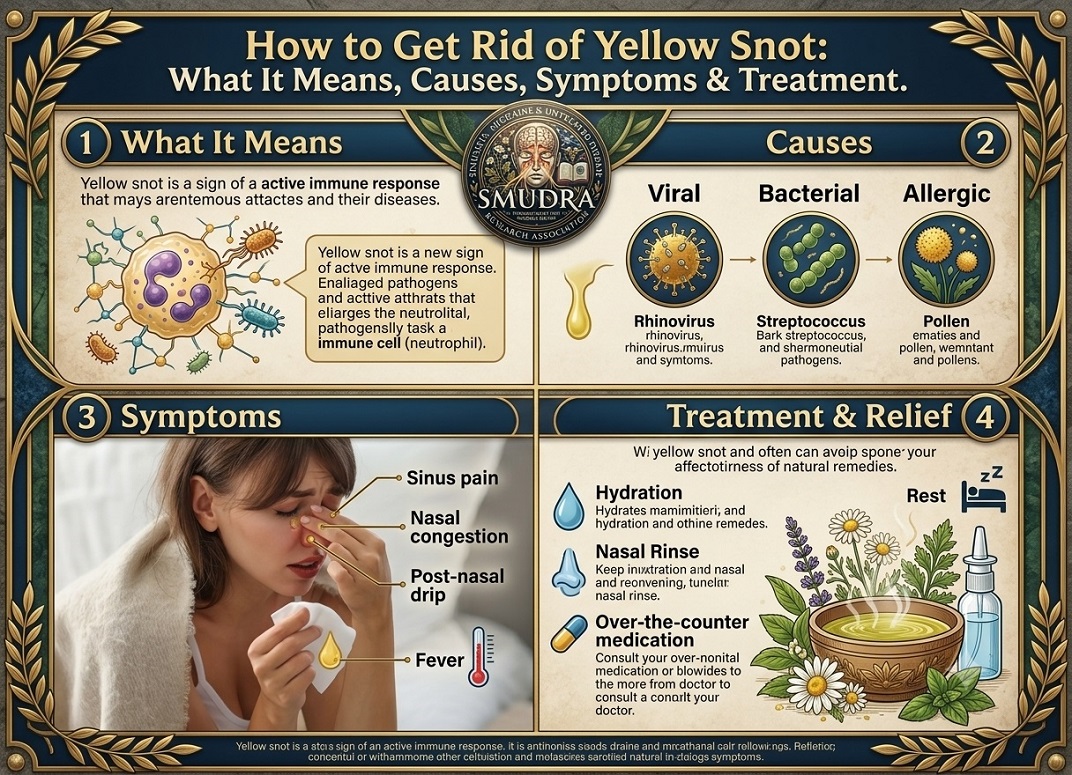
How to Get Rid of Yellow Snot: What It Means, Causes, Symptoms & Treatment
Yellow snot is common, but what does it actually mean? Yellow nasal mucus can appear during a cold, allergies, sinus inflammation, or other conditions affecting the nose and sinuses. Although the color of your mucus can change when your immune system responds to an infection or inflammation, yellow snot does not automatically mean you have a bacterial infection or need antibiotics.
If you’re experiencing yellow nasal discharge, nasal congestion, facial pressure, sinus headache, or post-nasal drip, understanding the possible causes can help you decide what to do next.
In this guide, SMUDRA explains what yellow snot means, common causes, ways to support healthy sinus drainage, and when professional evaluation may be appropriate.
What Does Yellow Snot Mean?
Normal nasal mucus is usually clear. When your body responds to inflammation, a viral illness, allergies, or another irritant, the mucus can become thicker and change from clear to white, yellow, or green.
The color can partly reflect immune cells and other substances present in the mucus.
Importantly, yellow mucus alone cannot tell you whether an infection is viral or bacterial. Other factors—including how long symptoms have lasted, whether they are improving or getting worse, and whether you have significant pain or fever—are more useful when assessing the problem.
Common Causes of Yellow Nasal Discharge
1. Common Cold or Viral Infection
A cold can cause increased mucus production, nasal congestion, sneezing, coughing, and throat irritation.
As the illness progresses, mucus may become thicker and yellow. Many uncomplicated viral respiratory infections improve with time and supportive care.
2. Acute Sinusitis
Acute sinusitis, also called acute rhinosinusitis, occurs when the nasal and sinus passages become inflamed.
Possible symptoms include:
- Yellow or green nasal mucus
- Nasal congestion
- Facial pressure
- Facial pain
- Headache
- Reduced sense of smell
- Post-nasal drainage
- Cough
A change in mucus color by itself does not establish a bacterial sinus infection.
3. Chronic Sinusitis
When sinus symptoms persist for 12 weeks or longer, chronic rhinosinusitis may need to be considered.
People with ongoing sinus problems may experience:
- Persistent nasal blockage
- Facial pressure
- Post-nasal drip
- Reduced sense of smell
- Thick nasal mucus
- Headache or facial discomfort
- Recurrent flare-ups
Persistent symptoms deserve an appropriate clinical evaluation rather than simply treating mucus color.
4. Allergic Rhinitis
Allergies can cause inflammation inside the nose and lead to congestion, sneezing, itching, watery discharge, and post-nasal drainage.
If mucus becomes thicker or changes color during an allergy flare-up, it does not necessarily mean that a bacterial infection has developed.
5. Environmental Irritants
Smoke, dust, pollution, chemical fumes, and very dry air can irritate the nasal lining.
Reducing exposure to these irritants and maintaining comfortable indoor humidity may help support normal nasal function.
6. Nasal Polyps or Structural Problems
Nasal polyps, a deviated nasal septum, or other structural problems can interfere with normal airflow and sinus drainage.
If you repeatedly experience nasal blockage, reduced smell, or recurring sinus symptoms, a medical evaluation can help identify possible contributing factors.
Is Yellow Snot Always a Sign of Infection?
No.
One of the most common misconceptions about yellow or green mucus is that it automatically means you have a bacterial infection.
Mucus can change color during the natural course of a respiratory illness because of inflammation and immune-system activity. Therefore, mucus color should be considered alongside your other symptoms and their duration.
For example, someone with yellow mucus but steadily improving cold symptoms may not have the same situation as someone whose symptoms are getting significantly worse after initially improving.
How to Get Rid of Yellow Snot
The best approach depends on the underlying cause.
For mild symptoms associated with a cold or temporary nasal irritation, supportive measures may help you feel more comfortable while your body recovers.
1. Stay Hydrated
Drink adequate fluids throughout the day.
Good hydration can help prevent mucus from becoming excessively thick and may make nasal secretions easier to clear.
2. Use Saline Nasal Spray or Rinse
A saline nasal spray or appropriately prepared saline rinse can help moisturize the nasal passages and remove mucus and irritants.
If using a nasal irrigation device, always follow the product instructions and use appropriately prepared water.
3. Keep Indoor Air Comfortable
Dry indoor air can irritate the nasal passages.
A properly maintained humidifier may help when the air is particularly dry. Avoid excessive humidity, however, because it can encourage mold growth.
4. Avoid Smoke and Irritants
Try to minimize exposure to:
- Cigarette smoke
- Heavy pollution
- Dust
- Strong chemical fumes
- Other known nasal irritants
Reducing irritation can support healthier nasal passages.
5. Manage Allergies
If allergies are contributing to congestion, identifying and managing your triggers can be an important part of sinus care.
Depending on the individual situation, a healthcare professional may recommend treatments such as antihistamines, nasal medications, or allergy-specific therapy.
6. Give Your Body Time to Recover
Many viral respiratory infections improve without antibiotics.
Rest, hydration, appropriate symptom management, and monitoring your symptoms can be useful while your body recovers.
Yellow Snot and Sinus Headache: Is There a Connection?
Yellow mucus may occur alongside sinus inflammation, which can also cause facial pressure or headache.
Sinus-related discomfort may be felt around the:
- Forehead
- Cheeks
- Nose
- Eyes
- Upper teeth
However, not every headache occurring during nasal congestion is caused by sinusitis. Migraine and other headache disorders can produce symptoms that sometimes feel similar to sinus pressure.
If headaches are frequent, severe, unusual, or persistent, professional assessment is recommended.
When Should You Be Concerned About Yellow Mucus?
Yellow mucus is often not an emergency. However, you should consider medical evaluation if symptoms are persistent, severe, recurrent, or getting worse.
Pay particular attention to:
- Symptoms lasting more than about 10 days without improvement
- Symptoms that become worse after initially improving
- Significant or persistent facial pain or pressure
- Persistent nasal obstruction
- Recurrent sinus problems
- Reduced sense of smell that does not resolve
- Persistent post-nasal drainage
- Fever or feeling significantly unwell
- Swelling around the eyes or face
- Severe headache or other unusual symptoms
Seek urgent medical attention for severe symptoms such as swelling around the eye, vision changes, confusion, severe headache, or other rapidly worsening symptoms.
Can You Prevent Yellow Snot?
You cannot prevent every cold, allergy flare-up, or sinus problem, but several everyday habits can support nasal and respiratory health.
Helpful habits include:
Stay hydrated: Drink sufficient fluids throughout the day.
Practice good hand hygiene: Regular handwashing can reduce exposure to respiratory pathogens.
Avoid tobacco smoke: Smoke can irritate the nasal and respiratory passages.
Manage allergies: Work with a healthcare professional if allergies repeatedly trigger nasal symptoms.
Keep your environment clean: Reduce dust and other known irritants where practical.
Maintain comfortable indoor humidity: Avoid extremely dry or excessively humid environments.
Address recurring nasal blockage: Persistent obstruction should be evaluated rather than repeatedly ignored.
Yellow Snot vs. Green Snot: What’s the Difference?
Both yellow and green mucus can occur during inflammation or respiratory infections.
The color alone does not reliably tell you:
- Whether an infection is bacterial
- Whether antibiotics are necessary
- How severe the condition is
Instead of focusing only on mucus color, pay attention to the duration, severity, progression, and combination of symptoms.
When to See a Sinus Specialist
Consider speaking with a qualified healthcare professional if:
- Your symptoms keep coming back.
- Nasal congestion is interfering with normal breathing.
- You have persistent facial pressure or pain.
- You frequently experience sinus infections.
- You have ongoing post-nasal drip.
- Your sense of smell remains reduced.
- Symptoms are not improving as expected.
- You have persistent nasal blockage.
A specialist can assess your symptoms and determine whether allergies, infection, chronic inflammation, nasal polyps, structural problems, or another condition may be contributing.
SMUDRA Approach to Sinus & Migraine Care
SMUDRA focuses on sinusitis, migraine, nasal symptoms, and related health concerns, with an emphasis on individualized assessment and integrative approaches.
If you regularly experience yellow nasal mucus, sinus congestion, facial pressure, headaches, post-nasal drip, or recurring sinus symptoms, getting an appropriate evaluation is an important first step.
Treatment should be based on the underlying cause rather than mucus color alone.
Sino Care Sinusitis Migraine Treatment Pack
For people exploring supportive approaches to sinus and migraine wellness, SMUDRA also offers the Sino Care Sinusitis Migraine Treatment Pack.
Before using any health product, particularly if you have an ongoing medical condition or take other medicines, discuss its suitability with an appropriately qualified healthcare professional.
Frequently Asked Questions About Yellow Snot
Is yellow snot bad?
Not necessarily. Yellow mucus can occur during a cold, inflammation, allergies, or other nasal conditions. The color alone does not indicate how serious the problem is.
Does yellow snot mean I need antibiotics?
No. Yellow or green mucus alone does not mean that antibiotics are required. A healthcare professional can determine whether treatment for a bacterial infection is appropriate based on the overall clinical picture.
How long does yellow snot usually last?
The duration depends on the underlying cause. Yellow mucus associated with a common cold may resolve as the illness improves. Persistent or worsening symptoms should be evaluated.
How can I clear yellow mucus from my nose?
Hydration, saline nasal spray or rinse, avoiding irritants, and maintaining comfortable indoor humidity may help with mucus clearance and nasal comfort.
Is yellow snot a sign of sinusitis?
It can occur with sinusitis, but yellow mucus alone does not diagnose sinusitis. Other symptoms such as persistent congestion, facial pressure, reduced smell, and the duration and progression of symptoms are important.
Can allergies cause yellow mucus?
Allergies primarily cause nasal inflammation and commonly produce clear mucus, but mucus can become thicker or change appearance during an inflammatory episode or when another respiratory illness is present.
When should I see a doctor for yellow snot?
Consider professional evaluation when symptoms persist without improvement, repeatedly return, become worse, or occur with significant facial pain, swelling, persistent fever, severe headache, vision changes, or other concerning symptoms.
Final Takeaway
Yellow snot is common and does not automatically mean you have a serious infection.
The most important clues are the duration of symptoms, accompanying symptoms, and whether your condition is improving or getting worse.
If yellow nasal discharge occurs repeatedly with sinus congestion, facial pressure, headaches, post-nasal drip, reduced smell, or persistent nasal blockage, consider getting evaluated to identify the underlying cause.
Don’t judge your sinus health by mucus color alone—look at the whole pattern of symptoms.