


Subtotal ₹0.00


 24 Hour Emergency Aid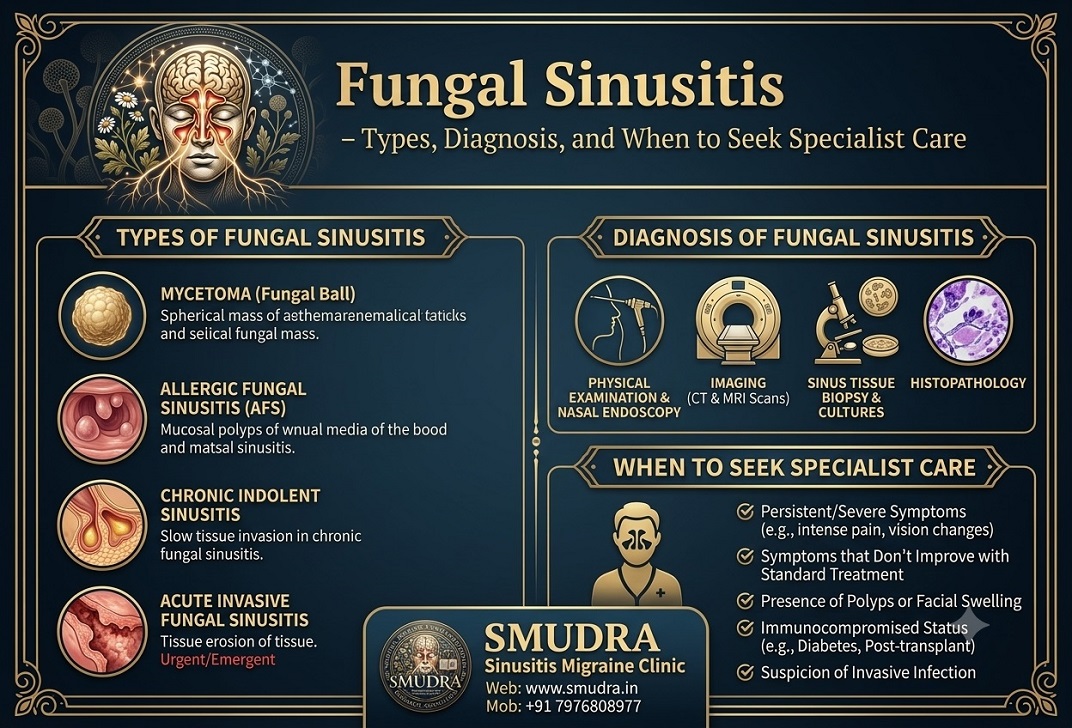
Fungal Sinusitis – Types, Diagnosis, and When to Seek Specialist Care
Keyword focus: Fungal sinusitis (with natural inclusion of related terms like invasive fungal sinusitis, allergic fungal rhinosinusitis, and fungal ball)
Fungal sinusitis is more common than many people realize, and it is not a single disease. Classification depends on the severity, intensity, and degree of sinus invasion. Broadly, it falls into two categories: non-invasive fungal sinusitis and invasive fungal sinusitis. Recognizing the differences is essential for accurate diagnosis and appropriate treatment.
Non-Invasive Fungal Sinusitis
These forms do not penetrate the sinus tissue or blood vessels:
- Fungal ball (also called mycetoma): A dense collection of fungal debris that usually sits in one sinus, most often the maxillary sinus.
- Saprophytic fungal sinusitis: Superficial fungal colonization of mucus crusts inside the nasal cavity or sinuses without tissue invasion.
- Allergic fungal rhinosinusitis (AFRS): An exaggerated allergic response to fungal elements, typically seen in patients with nasal polyps, thick “peanut-butter” like mucus, and elevated IgE levels.
Invasive Fungal Sinusitis
These forms invade mucosa, bone, or blood vessels and require urgent attention, especially in immunocompromised patients:
- Acute invasive fungal rhinosinusitis: Rapidly progressive and life-threatening. Common in patients with uncontrolled diabetes, hematologic malignancies, or on immunosuppressive therapy.
- Chronic invasive fungal rhinosinusitis: Slower progression over weeks to months, often in mildly immunocompromised individuals.
- Granulomatous invasive sinusitis: Characterized by granuloma formation; more frequently reported in certain geographic regions.
How Fungal Sinusitis Is Diagnosed
Accurate diagnosis requires a combination of:
- Detailed patient history and clinical presentation
- Nasal endoscopy
- Imaging (CT and sometimes MRI)
- Endoscopic biopsy with histopathology
- Relevant laboratory investigations (including fungal cultures and immune work-up when indicated)
No single test is sufficient on its own. A coordinated healthcare team—ENT specialists, radiologists, pathologists, and infectious disease experts—plays a critical role in reaching the correct diagnosis and planning treatment.
Exceptional healthcare is not just about treating illnesses; it’s about providing compassionate, patient-centered care that makes a real difference in people’s lives. From the moment you walk in, you are met with professionalism, warmth, and expertise that inspire confidence.
Amit Chouhan
Why Early Evaluation Matters
Delayed recognition of invasive forms can lead to orbital or intracranial complications. Even non-invasive forms such as allergic fungal rhinosinusitis can cause persistent nasal blockage, facial pressure, and reduced quality of life if left untreated.
If you experience persistent sinus symptoms that do not respond to standard treatment, recurrent nasal polyps, thick discolored mucus, or facial pain/pressure—especially if you have diabetes or a weakened immune system—specialist evaluation is recommended.
SMUDRA Sinusitis Migraine Clinic focuses on comprehensive assessment and management of complex sinus conditions, including fungal sinusitis.
Request an appointment
Web: www.smudra.in
Mobile: +91 7976808977
Sinusitis Migraine and Untreated Diseases Research Association