


Subtotal ₹0.00


 24 Hour Emergency Aid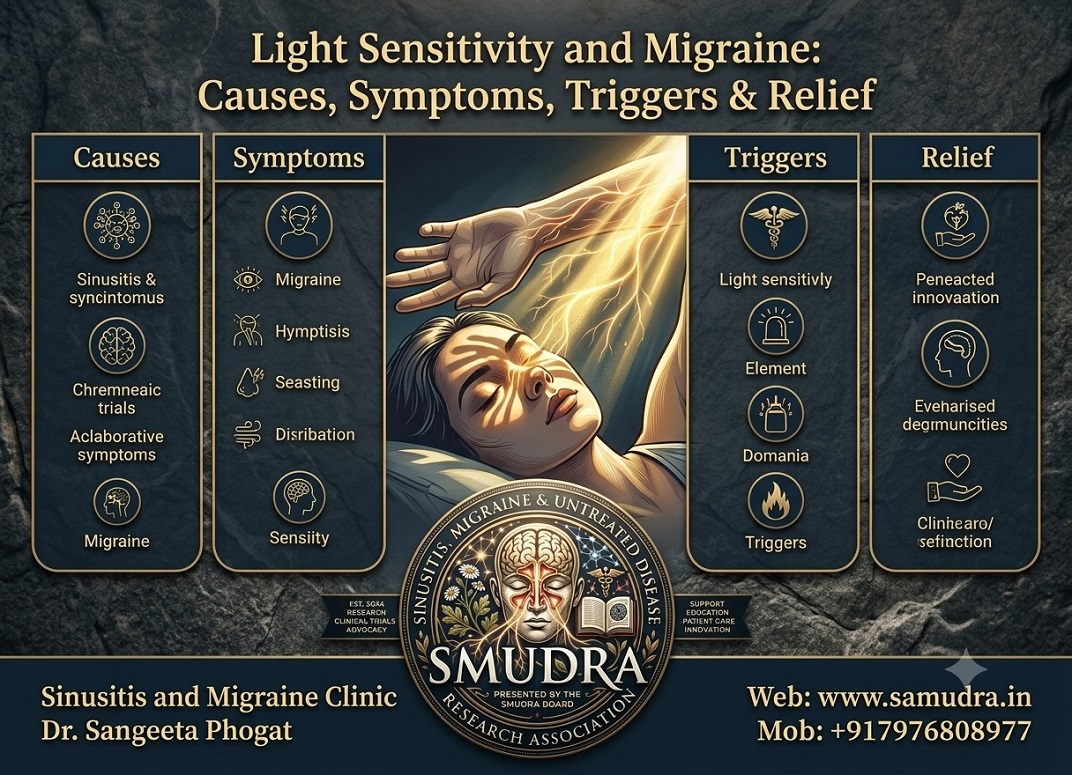
Light Sensitivity and Migraine: Causes, Symptoms, Triggers & Relief
Primary Keyword: Light Sensitivity and Migraine
Secondary Keywords: migraine light sensitivity, photophobia migraine, migraine symptoms, migraine triggers, migraine headache treatment, sinusitis and migraine, natural migraine relief
Light sensitivity, medically known as photophobia, is one of the most common and uncomfortable symptoms associated with migraine. For some people, bright sunlight, computer screens, mobile phones, fluorescent lights, or even normal indoor lighting can make migraine pain significantly worse.
If you experience a headache accompanied by sensitivity to light, nausea, throbbing pain, or a need to rest in a dark and quiet room, your symptoms may be associated with migraine.
Understanding the connection between light sensitivity and migraine can help you identify potential triggers and take appropriate steps toward managing your symptoms.
What Is Light Sensitivity?
Light sensitivity, or photophobia, is an increased sensitivity or intolerance to light. A person experiencing photophobia may find ordinary levels of light uncomfortable or may experience worsening headache or eye discomfort when exposed to bright surroundings.
Light sensitivity can occur with several conditions, but it is particularly common during migraine attacks.
People with migraine may prefer:
- 🌞 Avoiding bright sunlight
- 📱 Reducing mobile and computer screen exposure
- 💡 Staying away from harsh or flashing lights
- 🕶️ Wearing sunglasses outdoors
- 🌙 Resting in a dark, quiet room
What Is the Connection Between Light Sensitivity and Migraine?
During a migraine attack, the brain can become unusually sensitive to sensory stimulation. Light can stimulate pathways involved in migraine pain, potentially increasing discomfort.
This is why a person experiencing migraine may instinctively seek a dark room and avoid sunlight, television, mobile screens, or bright indoor lighting.
Light sensitivity and migraine often occur together, although the severity and duration can vary from person to person.
Common Symptoms of Migraine
Migraine is more than an ordinary headache. Symptoms may include:
- 🤕 Moderate to severe headache
- 💓 Pulsing or throbbing pain
- ↔️ Pain that may occur on one side of the head
- 🤢 Nausea or vomiting
- 💡 Sensitivity to light
- 🔊 Sensitivity to sound
- 👃 Increased sensitivity to smells
- 🌀 Dizziness
- 👁️ Visual disturbances
- ⚡ Difficulty concentrating
- 😴 Fatigue
Some people also experience an aura before or during a migraine attack. Aura may involve visual changes such as flashing lights, zigzag patterns, blind spots, or other temporary neurological symptoms.
Common Light-Related Migraine Triggers
Different types of light can trigger or worsen migraine symptoms.
1. Bright Sunlight
Strong sunlight, especially when reflected from roads, water, snow, or buildings, may aggravate migraine symptoms in sensitive individuals.
2. Computer and Mobile Screens
Extended screen use can contribute to eye strain and may worsen symptoms for some people with migraine, particularly when combined with inadequate sleep or prolonged concentration.
3. Fluorescent Lighting
Some people find fluorescent or rapidly fluctuating artificial lighting uncomfortable during migraine episodes.
4. Flashing or Flickering Lights
Flashing lights may trigger headaches or migraine symptoms in susceptible individuals.
5. Sudden Changes in Light
Moving suddenly from a dark environment into bright sunlight can be uncomfortable and may aggravate symptoms.
Why Does Light Make Migraine Worse?
Migraine involves complex interactions between the brain, nerves, blood vessels, and sensory processing systems.
During an attack, sensory pathways can become more sensitive. As a result, light that normally feels comfortable may become unpleasant or painful.
This increased sensitivity is one reason why people experiencing migraine frequently prefer darkness and reduced sensory stimulation.
How Can You Reduce Light Sensitivity During a Migraine?
Several practical measures may help reduce discomfort during an attack:
🌙 Rest in a Dark, Quiet Room
Reducing exposure to bright light and loud sounds may make it easier to rest during a migraine episode.
📱 Reduce Screen Exposure
Lower screen brightness, take regular breaks, and avoid prolonged screen use when symptoms are severe.
🕶️ Protect Your Eyes Outdoors
Sunglasses can be useful in bright outdoor environments. However, constantly staying in very dark environments may not be helpful for everyone, so discuss persistent light sensitivity with a healthcare professional.
💧 Stay Hydrated
Dehydration can contribute to headaches in some people. Maintaining adequate fluid intake is an important part of general headache management.
😴 Maintain Regular Sleep
Irregular sleep schedules can contribute to migraine attacks. Try to maintain consistent sleeping and waking times.
🍽️ Avoid Skipping Meals
Long gaps between meals may trigger headaches in some individuals. Regular, balanced meals can support overall migraine management.
Can Sinus Problems Be Related to Headaches and Migraine?
Sinus-related symptoms and migraine can sometimes overlap. Nasal congestion, facial pressure, headache, and sensitivity to environmental triggers can make it difficult to determine the exact cause of symptoms.
Some people who believe they have a “sinus headache” may actually be experiencing migraine. At the same time, genuine sinus conditions can cause facial pressure and headache.
For recurring or severe symptoms, proper evaluation is important before assuming that every headache is caused by sinus problems.
When Should You Seek Medical Advice?
Occasional migraine symptoms may be manageable, but frequent, severe, or changing headaches should be evaluated by a qualified healthcare professional.
Seek urgent medical attention for a sudden, extremely severe headache or a headache accompanied by symptoms such as weakness, confusion, fainting, difficulty speaking, seizures, high fever with neck stiffness, or significant vision changes.
A healthcare professional can help determine whether your symptoms are consistent with migraine or another condition and recommend an appropriate treatment approach.
Sino Care Deviated Septum Treatment Pack
For individuals dealing with nasal and sinus-related concerns, Sino Care Deviated Septum Treatment Pack is presented by SMUDRA as an Ayurvedic treatment approach.
If you experience recurring nasal congestion, sinus-related discomfort, or breathing difficulties, it is important to understand the underlying cause rather than treating symptoms blindly.
Sino Care focuses on sinusitis and related respiratory concerns through an Ayurvedic treatment approach.
Why Consider Professional Guidance?
Persistent headaches, migraine symptoms, nasal blockage, facial pressure, and light sensitivity can have different causes. A proper assessment can help identify the factors contributing to your symptoms and guide an appropriate treatment plan.
Sinusitis and Migraine Clinic Franchise
Healthcare professionals and entrepreneurs interested in expanding access to sinusitis and migraine-focused care can also explore the Sinusitis and Migraine Clinic Franchise opportunity.
The concept is designed around specialized care for people experiencing recurring sinus and migraine-related concerns.
Frequently Asked Questions
Is light sensitivity a symptom of migraine?
Yes. Light sensitivity, also called photophobia, is a common symptom associated with migraine.
Why do I want to stay in a dark room during a migraine?
Bright light can feel uncomfortable or painful during a migraine attack. Reducing light exposure may help decrease sensory stimulation while you rest.
Can phone screens trigger migraine?
For some people, prolonged screen exposure, glare, brightness, visual strain, or flickering can worsen migraine symptoms. Taking regular breaks and adjusting screen brightness may help.
Is every light-sensitive headache a migraine?
No. Light sensitivity can occur with several conditions. If headaches are frequent, severe, or unusual for you, professional evaluation is recommended.
Can sinus problems cause headaches?
Sinus conditions can cause facial pressure and headache, but migraine can also produce symptoms that feel similar to sinus problems. Correct identification of the cause is important.
Final Thoughts
The connection between light sensitivity and migraine is well recognized. For many people, bright sunlight, screens, artificial lighting, and other visual stimuli can worsen migraine symptoms.
Recognizing your personal triggers, maintaining healthy sleep and meal routines, staying hydrated, and seeking appropriate professional guidance can help you better manage recurring headaches.
If you frequently experience migraine with light sensitivity, nausea, throbbing head pain, or sinus-related symptoms, consider discussing your symptoms with a qualified healthcare professional.
For More Information
Sino Care Deviated Septum Treatment Pack
Sinusitis and Migraine Clinic Franchise
Dr. Sangeeta Phogat
🌐 Web: www.samudra.in
📞 Mob: +91 79768 08977