
Subtotal ₹0.00


 24 Hour Emergency Aid
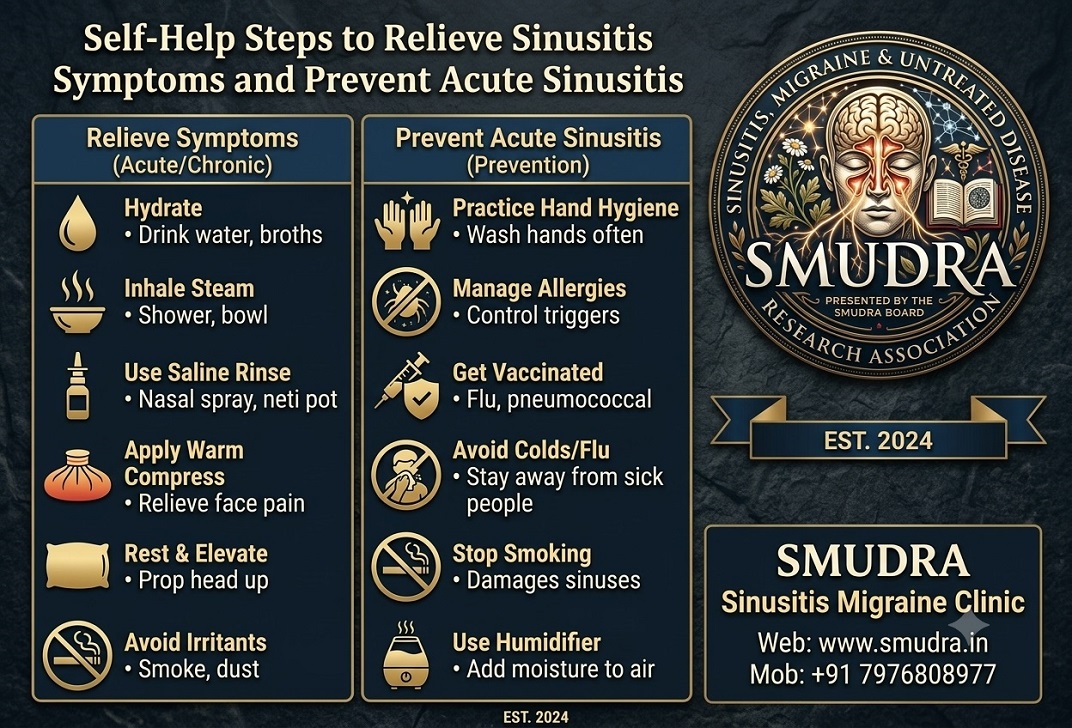
Self-Help Steps to Relieve Sinusitis Symptoms and Prevent Acute Sinusitis
Sinusitis (inflammation or infection of the sinuses) often follows a cold or allergies and causes facial pain, congestion, thick mucus, and pressure. Most mild cases improve with simple home care. Here are practical self-help steps to relieve symptoms and lower your risk of acute sinusitis.
Self-Help Steps to Relieve Sinusitis Symptoms
Drink plenty of fluids
Water or juice thins mucus secretions and promotes drainage. Avoid caffeine and alcohol—they can dehydrate you. Alcohol may also worsen inflammation in the sinuses and nasal lining.
Moisten your sinus cavities
Inhale steam by wrapping a towel over your head and breathing the vapors from a bowl of hot water (keep a safe distance to avoid burns). A hot shower or bath works similarly. Warm, moist air eases pain and helps mucus drain.
Apply warm compresses
Place warm, moist towels around your nose, cheeks, and eyes for 10–15 minutes. This reduces facial pain and pressure.
Rinse your nostrils (nasal irrigation / Jal Neti)
Use a neti pot, sinus rinse bottle, or similar device with a saline solution. This clears mucus, allergens, and irritants.
Important safety note: Always use distilled, sterile, previously boiled and cooled water, or water filtered through a device with an absolute pore size of 1 micron or smaller. Never use untreated tap water. Rinse the irrigation device thoroughly after each use and let it air-dry completely.
Rest
Adequate rest helps your body fight the infection and recover faster.
Sleep with your head elevated
Propping your head up with extra pillows improves sinus drainage and reduces nighttime congestion.
Steps to Reduce Your Risk of Acute Sinusitis
- Avoid upper respiratory infections: Minimize close contact with people who have colds or flu. Wash your hands frequently with soap and water, especially before meals.
- Manage your allergies: Work with a healthcare provider to keep symptoms under control.
- Avoid cigarette smoke and polluted air: Tobacco smoke and other pollutants irritate the lungs and nasal passages.
- Use a humidifier: If indoor air is dry (common with forced-air heating), adding moisture can help prevent sinusitis. Clean the humidifier regularly and thoroughly to keep it free of mold.
When to See a Healthcare Provider
Most people with acute sinusitis recover with self-care. Seek medical attention if you have:
- Symptoms that do not improve or worsen after a few days
- Persistent fever
- A history of recurrent or chronic sinusitis
- Severe symptoms, vision changes, or other concerning signs
Expert Care for Persistent Sinusitis and Related Issues
If home remedies are not enough or you experience frequent sinus problems, professional evaluation can help.
Request an appointment at SMUDRA Sinusitis Migraine Clinic
Sinusitis Migraine and Untreated Diseases Research Association
Web: www.smudra.in
Mobile: +91 7976808977
Simple daily habits—hydration, steam, saline rinses, rest, and clean air—can make a real difference for many people with sinusitis. Combine these self-help measures with timely medical advice when needed for the best results.